
Numerology uses numbers to study patterns related to human behaviour and tendencies. One of the most structured systems in numerology is the Loshu Grid. It helps analyse personality traits, mental approach, emotional balance, and practical behaviour using a person’s date of birth.
This article explains what the Loshu Grid is, how a Numeroscope is prepared, and how the 8 Yogas (Planes) are interpreted.
What Is the Lo shu Grid in Numerology?

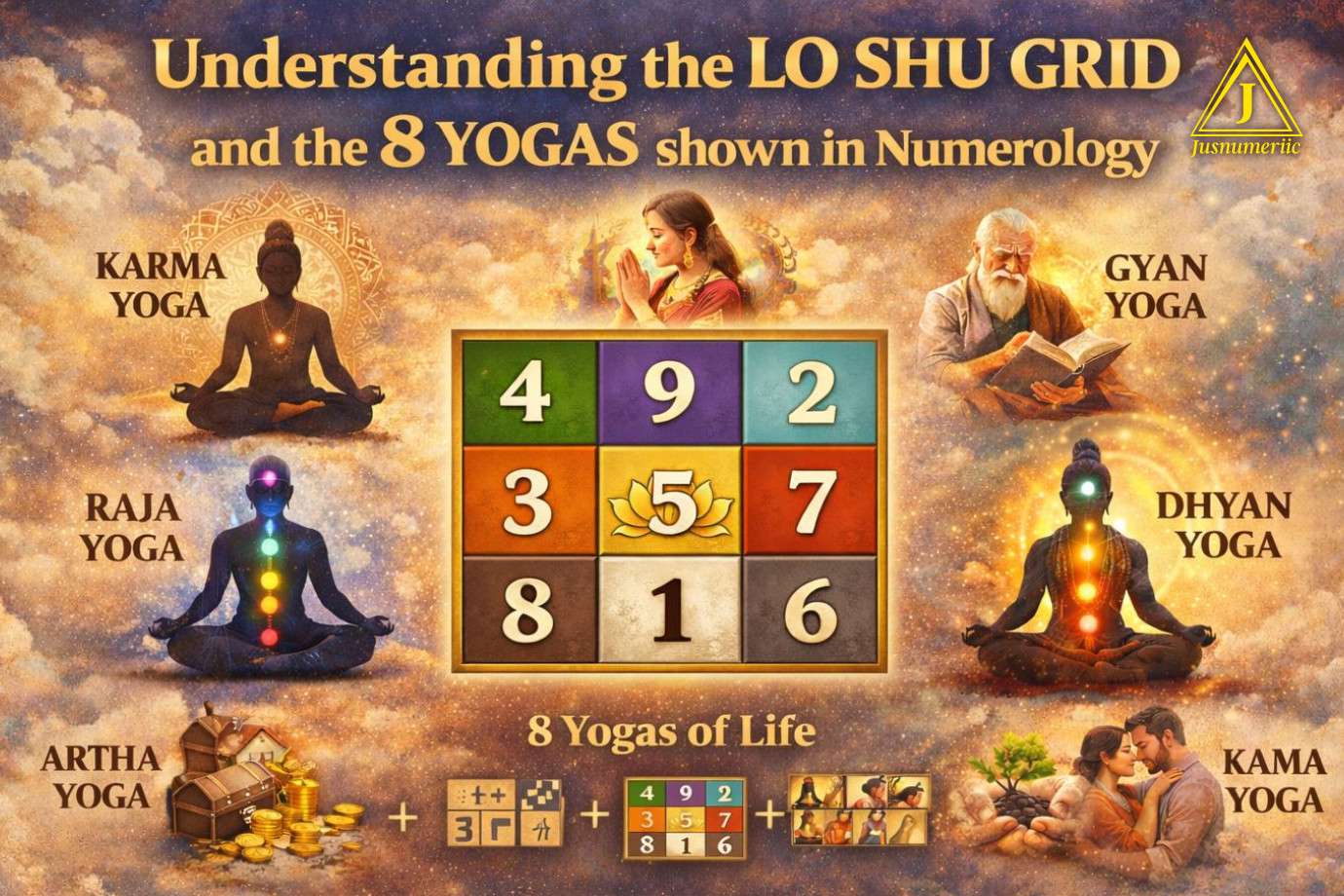
The Loshu Grid is a 3×3 numerical grid used in Chaldean numerology.
Each number from 1 to 9 has a fixed position in the grid.
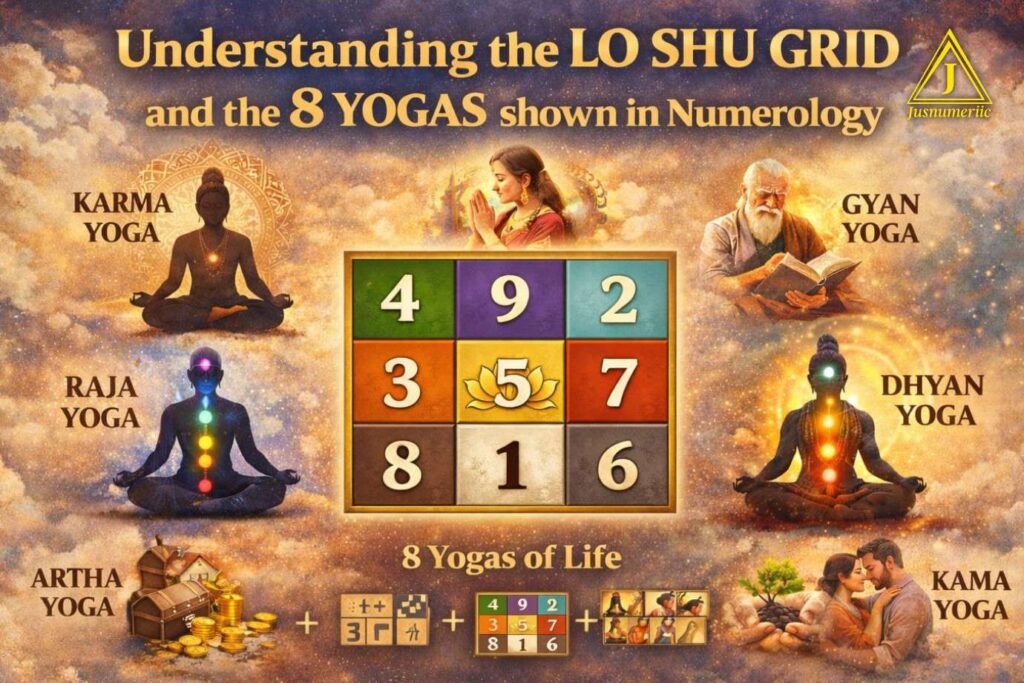
The standard Loshu Grid arrangement is:
| 4 | 9 | 2 |
| 3 | 5 | 7 |
| 8 | 1 | 6 |
- These positions are not random.
- Each number represents a specific type of energy and function.
- When numbers from a person’s date of birth are placed in this grid, a Numeroscope is formed.
How a Numeroscope Is Prepared Using the Loshu Grid
A Numeroscope is prepared using the date of birth (DOB).
The process involves:
- Breaking the DOB into individual digits
- Placing those digits into their fixed positions in the Loshu Grid
- Identifying present, missing, or repeated numbers
In numerology, three key numbers are also considered:
- Driver Number (D)
- Conductor Number (C)
- Kua Number (K)
These are derived from the date of birth and help in deeper analysis. The grid shows how different energies interact rather than focusing on a single number.
The 8 Yogas (Planes) in the Loshu Grid
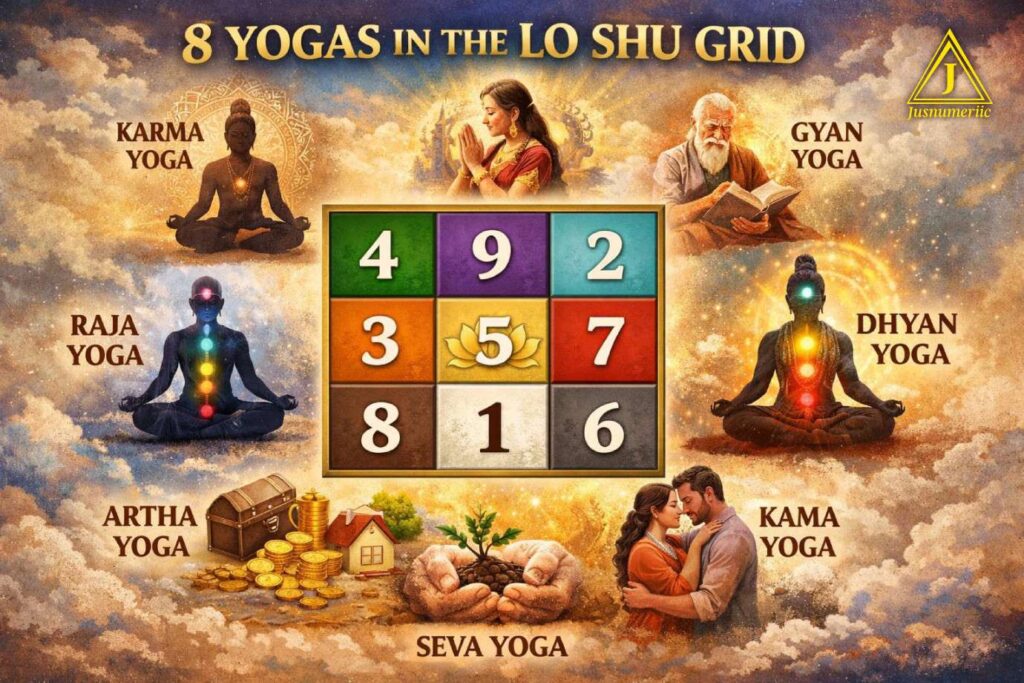
The Loshu Grid contains 8 important planes, also called Yogas. Each plane is formed by a specific combination of three numbers. These planes describe how a person thinks, decides, feels, and acts.
1. Mental Plane (4 – 9 – 2)
The Mental Plane represents intellectual ability and clarity of thought.
Key qualities:
- Sharp memory
- High intelligence
- Strong mental clarity
A strong Mental Plane shows analytical thinking and good understanding.
2. Thought Plane (4 – 3 – 8)
This plane is linked to imagination and planning.
Key qualities:
- Strong visualisation power
- Structured thinking
- Prudent decision-making
It reflects how ideas are formed before action.
3. Will Plane (9 – 5 – 1)
The Will Plane reflects inner strength and adaptability.
Key qualities:
- Strong will power
- Confidence
- Ability to adjust to situations
This plane shows how firmly a person stands by decisions.
4. Action Plane (2 – 7 – 6)
The Action Plane represents execution and response.
Key qualities:
- Action-oriented nature
- Quick approach
- Readiness to act
It explains how efficiently ideas are turned into action.
5. Practical Plane (8 – 1 – 6)
This plane shows realism and depth.
Key qualities:
- Practical thinking
- Detail-oriented approach
- Responsible attitude
It reflects how grounded and realistic a person is.
6. Emotional Plane (3 – 5 – 7)
The Emotional Plane relates to feelings and sensitivity.
Key qualities:
- Strong emotions
- Sensitive nature
- Heart-led decisions
This plane shows emotional balance and empathy.
7. Success Plane (Raj Yog) – 4 – 5 – 6
This plane is known as Raj Yog.
Key qualities:
- Growth and progress
- Support for success
- Stability after responsibility increases
It indicates potential for advancement when effort is consistent.
8. Success Plane (Earth Element) – 2 – 5 – 8
This plane is associated with stability and material grounding.
Key qualities:
- Stability
- Property-related tendencies
- Long-term security focus
It reflects a practical approach toward resources and structure.
Why the Loshu Grid Is Important in Numerology
The Loshu Grid offers a structured way to understand:
- Personality patterns
- Behavioural tendencies
- Strength areas and focus points
It does not replace effort or decision-making. It provides a framework to understand natural inclinations.
Conclusion
The Loshu Grid is a foundational tool in numerology. By studying number placements and the 8 Yogas, one can gain structured insight into thinking patterns, emotions, and actions. When used correctly, it supports self-awareness and balanced understanding.
You can continue learning about numerology systems, grids, and number meanings through our educational blogs published on our website.